 |
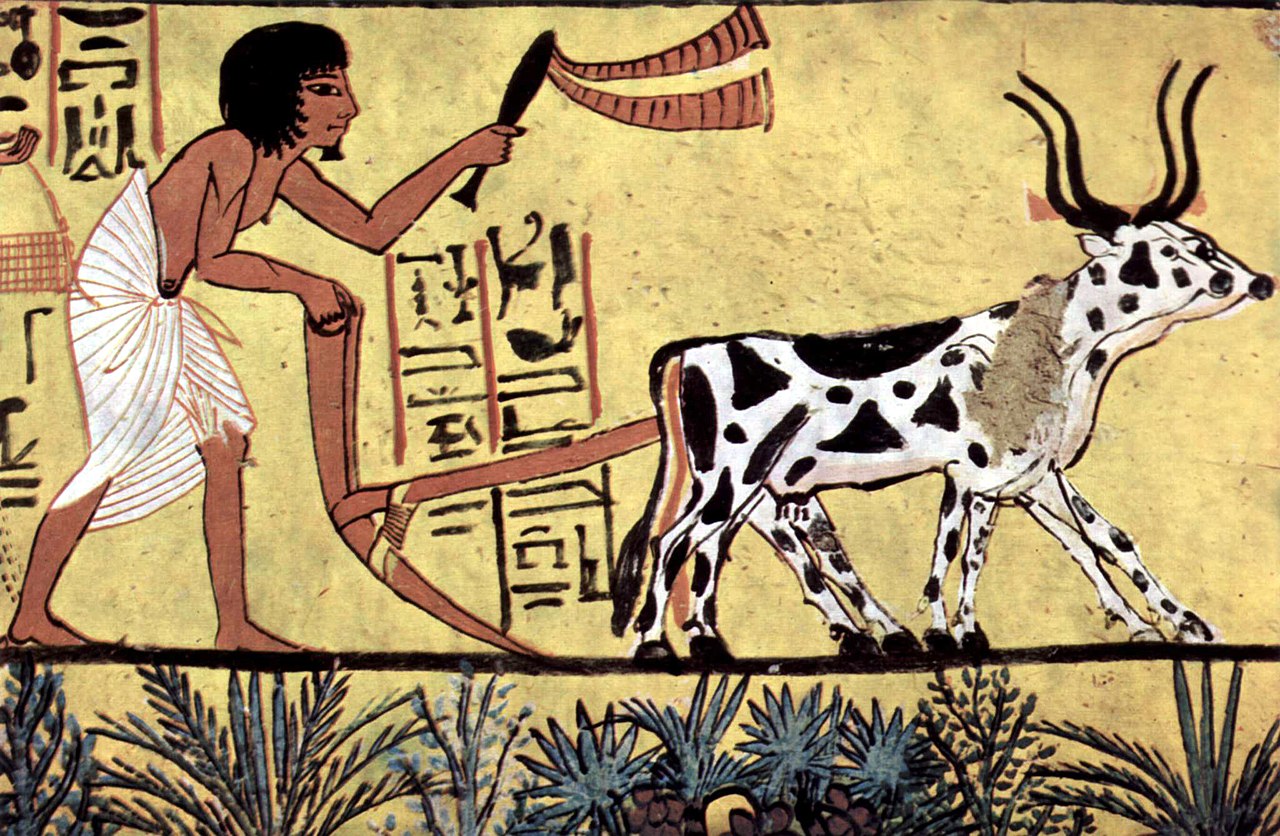
| Ploughing with a yoke of horned cattle in ancient Egypt. Painting from the burial chamber of Sennedjem c. 1200BC |
This is a milk-lover's blog, as readers already know, so it's high time I wrote a post about yoghurt. It's true, yoghurt doesn't appear much in historic cookbooks but it's a great favorite in many parts of the world. Its history goes back to the Neolithic age when milk-producing animals were domesticated. The first yoghurt was probably made by accident, then people found it keeps and began to experiment with it. Like cheese, it sustained and nourished them and became a staple food. On the periphery of Europe, its popularity increased during the Middle Ages. Before that, Greek and Roman cuisines featured acidic dairy products that were not yoghurt exactly. Perhaps it was a matter of taste but a lot of people simply didn't care much for it although buttermilk and soured milk were, and still are, regularly used in baked goods. Meanwhile yoghurt was cherished elsewhere - in the Balkans, Russia and the Middle East or further away.
There is no single recipe for yoghurt cake around the world. Yoghurt typically replaces the milk, yielding velvet-like textures or heavy moist crumb that is packed with aroma. Citrus fruit peel is the ideal flavor to match yoghurt cakes from the Balkans and Russia while exotic spices, like vanilla or cardamom, are featured in Asian versions. Incidentally, the acidic taste of yoghurt disappears in a cake unless you minimize the quantity of flour. The best example in this last category is a Turkish yoghurt cake, which is more like cheesecake than anything else. The recipe was featured in Claudia Roden's Arabesque (2005) but you can also find it online in sites and blogs of people who loved the cake.

Comments